


I like to say, “I grew up on Crayola,” and have always lived my life in some, if not many, aspects of the creative world: designer, artist, writer, sculptor, etc. Much to the chagrin of my family and friends, I can’t shut it off; it’s like an autonomic function.
I can’t watch a commercial, see a business with an interesting name, or think of a random pun without sharing campaign ideas stemming from it. It’s one of those “You know what they should do is…” types of afflictions. But this “always on” creative thinking is a big part of what’s made me successful in my career and as the VP of Brand Experience at PAN. It helps me never get bored and represents a big part of why I love marketing and PR. I’ve just learned to live with my fair share of eye rolls. 😉
My creative outlet of choice outside of work has always been woodcarving, and I’ve had plenty of stitches over the years to prove it. Making everything from abstract flowers to kinetic birds to waves to characters to woodcut scenes and wooden brain puzzles, it was always my go-to creative outlet…until eventually it wasn’t.
About 10 years ago, I hurt my pointer finger and was suddenly unable to do this thing that I loved so much—this thing that I was known for, that was part of my persona. But with my injury, I couldn’t handle the pressure it put on my finger, so it just felt pointless. (See what I did there?)
Then, about eight years ago, I had the idea of digging out some of my old art school supplies for one of my twins. He’s creatively inclined, and had also grown beyond Crayola, so I thought I would see what I had! Cue quixotic montage of going back to those art school days filled with pastel drawings, wire sculptures, all-nighter illustration sessions, and some uncomfortable figure drawing classes.
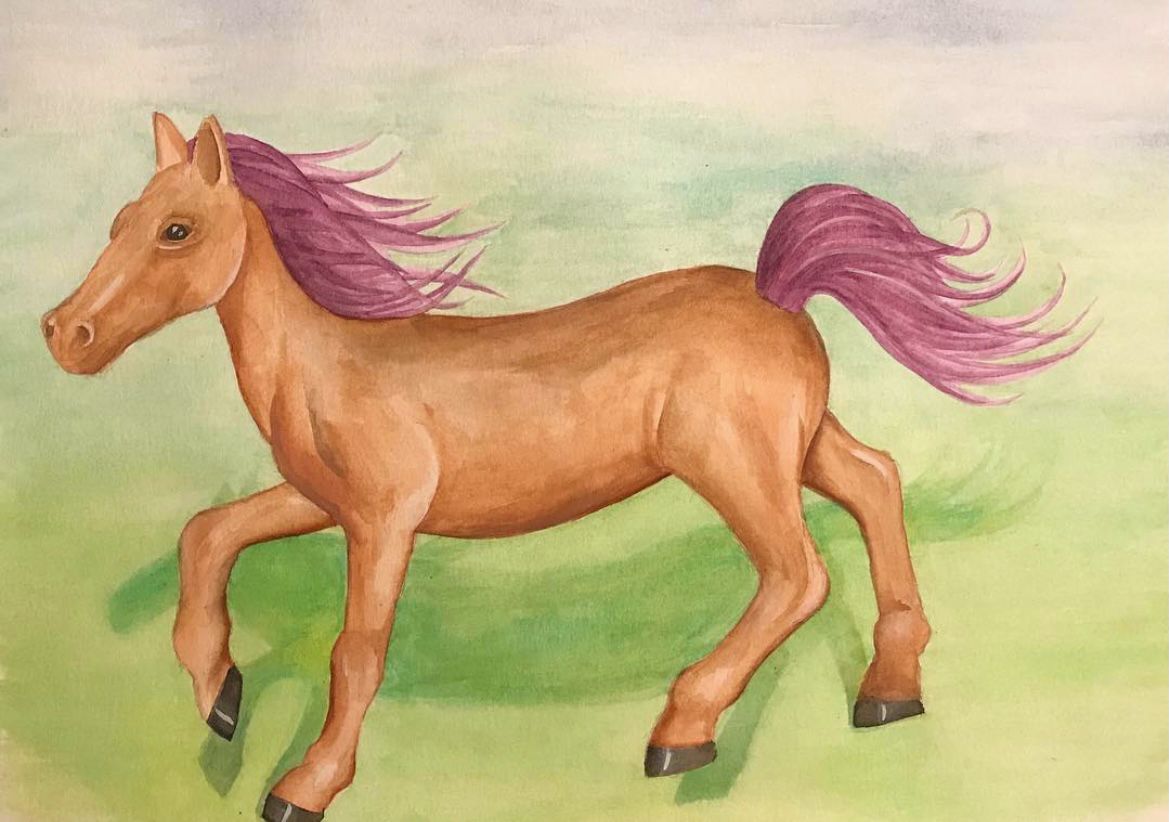
That memory lane led me to creating my first watercolor painting in about 25 years—I think it was in April of 2018. Up until then, I had maybe done 5 EVER! Painting just wasn’t my thing…until eventually it was.
Painting that one pink-haired, abstract horse started a new creative journey. I found a new outlet, a new vehicle to express myself and connect with others. Cut to about 300 paintings later (yes ~300) and I started seeing some interesting patterns and “rules of the road” while doing the work. Approaches and lessons that embody not only a way to stay true to my painting but also the way I live my life and keep thriving at work.
With that, I’m going to share ten of those “observations” with you—not so I can wax poetically or feel like I’m imparting some great wisdom but just in case some of them connect with you or offer up a new lens to view old problems through.
1. Sketch it out, but evolve as needed
The path is rarely linear, and that’s okay. With anything, start with a well-researched, solid plan, but if things start to go sideways, sometimes you just have to follow it. Those “happy accidents,” as Bob Ross used to say, can create some unique opportunities for greatness or teachable moments.
2. Trust the process
Every painting I start…I hate, for a while anyway. It’s not until I get about 80 percent through that I start to feel excited about how it’s coming together. The lesson? Trust yourself, don’t rush, and let something run its course. This one takes a while to get comfortable with, but embracing it minimizes anxiety and forces people to believe more in themselves.
3. Be curious and make it mean something
Do everything with curiosity, purpose, energy, perspective, pride, and it will move people. They might not like it, or they might love it, but when you put the work in and stand behind it, that’s what people remember. To quote Maya Angelou, “I’ve learned that people will forget what you said, people will forget what you did, but people will never forget how you made them feel.”
4. Own all the moments
We all get excited, passionate, and throw ourselves into things, but if you act too quickly or get ahead of your skis, things can get messy, when really you just need to give it a beat and settle in for the ride. It all works itself out in the end, you just never know when “the end” is. I also find the gaps between the working sessions are often where new inspiration and ideas strike.
5. Zoom out every now and then
It’s easy to get mired in the details, but understanding how it all fits together in the bigger picture is always key. Sometimes you need to minimize details in some areas to have people focus on others or look at something from a completely different vantage point to see what’s working and what’s not. This concept is as true in life as it is in work and play.
6. Embrace your own unique perspective
Don’t be afraid to be yourself. We are not carbon copies of each other, so we will always come at things from different perspectives. Which is great. I don’t want my ideas to look like other people’s, much like I don’t want other people to mimic mine. Everyone’s unique backgrounds, loves, passions, and dislikes are what guide us to the valuable things we bring to every table, meeting, and painting. People might not always like what you do, but if it’s done with purpose and conviction, people will find value in it.
7. Don’t focus solely on the tools
Tools are a vehicle to help you manifest your ideas; they are NOT the idea. If you rely on them too much, they become a crutch. Sure, if you use a less sophisticated tool, it might not give you the fidelity you want, but it could also force you to look at and approach something from a new angle, which could be beneficial. At the end of the day, you are the source of the idea, the vision, the strategy—the tools just help you bring it to life. Really good paint brushes are killer, though.
8. Think before you act
Easier said than done, but it can never be said enough. With painting, like in life, once you do something, you have to live with it. The more thoughtful you can be about your intentions, the more purposeful your work. And if you get ahead of yourself, you can either live with your choice or adapt; it’s all part of the game.
9. Remember, the last 10% is as important as the first 90%
Put in the work, but don’t coast. That last 10 percent is filled with double checking your work, adding extra details, making sure to highlight key focus areas, and cleaning up arrant distractions. It’s that last push that gets work from smart to disruptive, from good to great, and from “a like” to “a like, comment, and share.”
10. Do it all again
Do not rest on your laurels. And why would you want to? I find true joy in feeling good and celebrating what I’ve done, but the more you do it, the more excitement you get from the potential of what’s next. Learning from everything you do, both the good and bad, is part of pushing yourself and the work, otherwise you become a one trick pink-haired pony (see what I did there?). That type of mindset change only comes from doing something again, and again, and again.
I hope reading this didn’t feel like watching paint dry. But I’m curious if you found this helpful, interesting, or a complete waste of time. As a next step, think about which lesson(s) best fits your mindset or seems like something you’re willing to try. Who knows, maybe one of you might be inspired enough to paint your own pink-haired horse and start your own creative journey. It doesn’t have to be your thing…until eventually it is.
If you’re interested in seeing more of Nik’s watercolors or some of the incredible work he’s doing at PAN, follow him on LinkedIn or check out his watercolor website.